By Kurian Musa
Africa’s ambition to create jobs, accelerate economic growth and improve productivity will remain constrained unless the continent invests in developing a strong pipeline of scientists, researchers and innovators.
Prof. Vasey Mwaja, Chairperson of the National Commission for Science, Technology and Innovation (NACOSTI), said universities and research institutions must rethink how they train, retain and support researchers if science and technology are to become meaningful drivers of economic transformation.
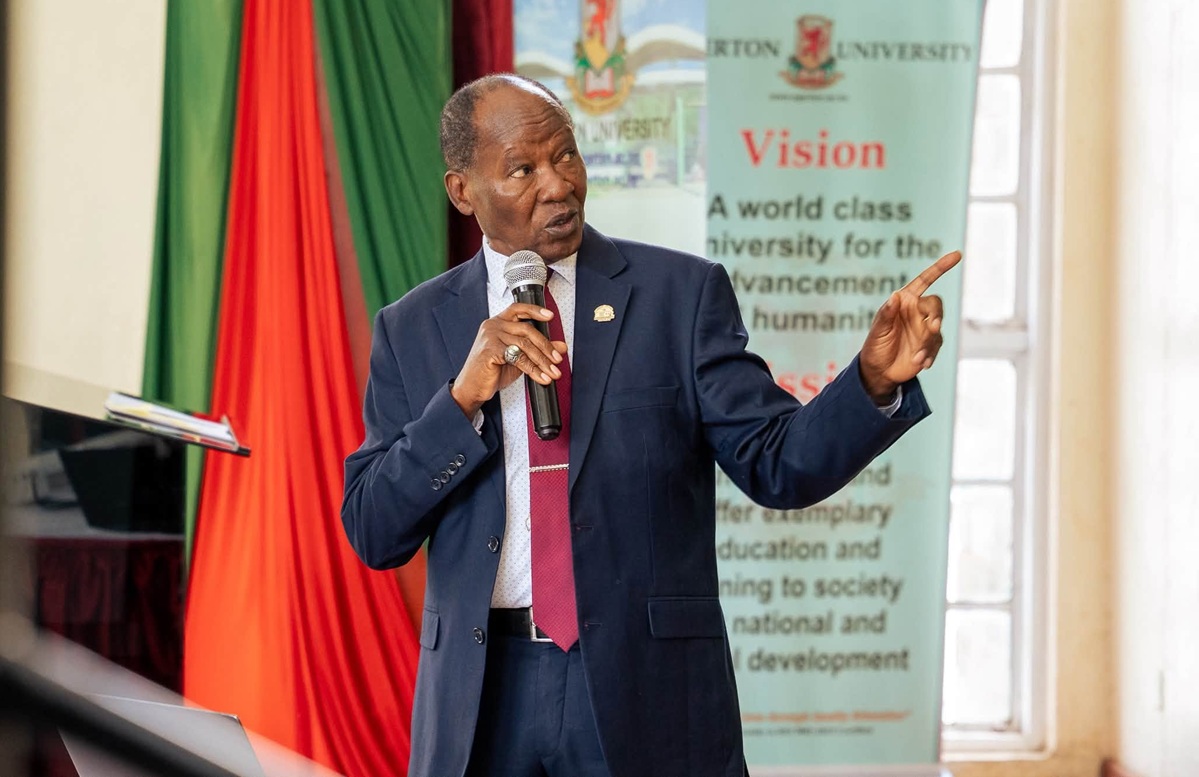
Chairman of the National Commission for Science, Technology and Innovation (NACOSTI) Prof. Vasey Mwaja delivers his keynote presentation during the Public Lecture at Kilimo Hall, Egerton University Main Campus in Njoro.(Photo: Kurian Musa/ Egerton University)
He Speaking during a public lecture at Kilimo hall Egerton University , Prof. Mwaja highlighted the shortage of PhD-qualified researchers, limited postdoctoral opportunities and inadequate academic staffing as some of the structural challenges weakening Africa’s research and innovation capacity.
He challenged universities to move beyond expanding student enrolment and focus on building sustainable research institutions capable of nurturing talent from doctoral training through postdoctoral development to senior research leadership.
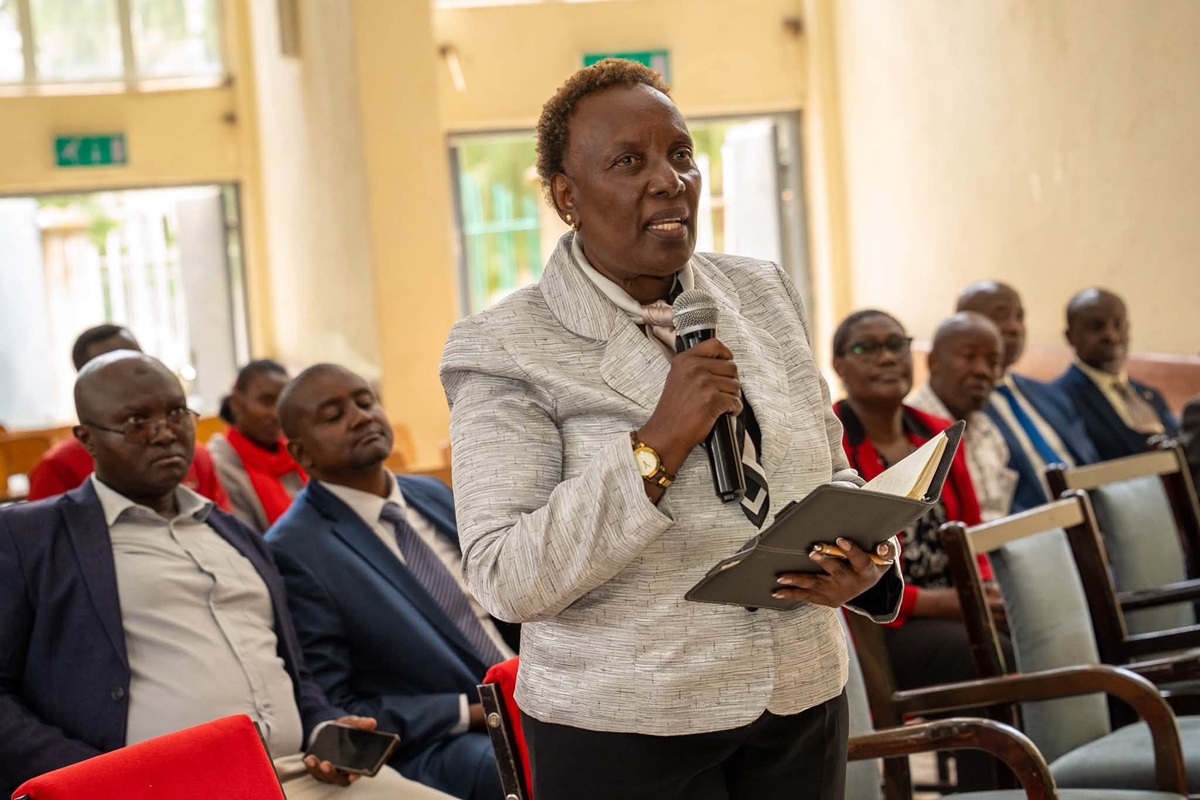
Director, marketing and resource mobilization, Prof.Nzula Kitaka addressing attendees during the Public Lecture at Kilimo Hall, Main Campus, Njoro.(Photo: Kurian Musa/ Egerton University)
Prof. Mwaja observed that increasing university enrolment without strengthening the academic workforce creates an unsustainable burden on existing faculty, limiting their ability to mentor students, supervise research and generate new knowledge.
He emphasised that postdoctoral researchers occupy a critical position in the academic ecosystem, providing an important link between doctoral training and independent research leadership.The NACOSTI Chair also raised concern over the loss of talented women from science, technology, engineering and mathematics (STEM), calling attention to gender inequality as a challenge that continues to undermine Africa's research talent base.